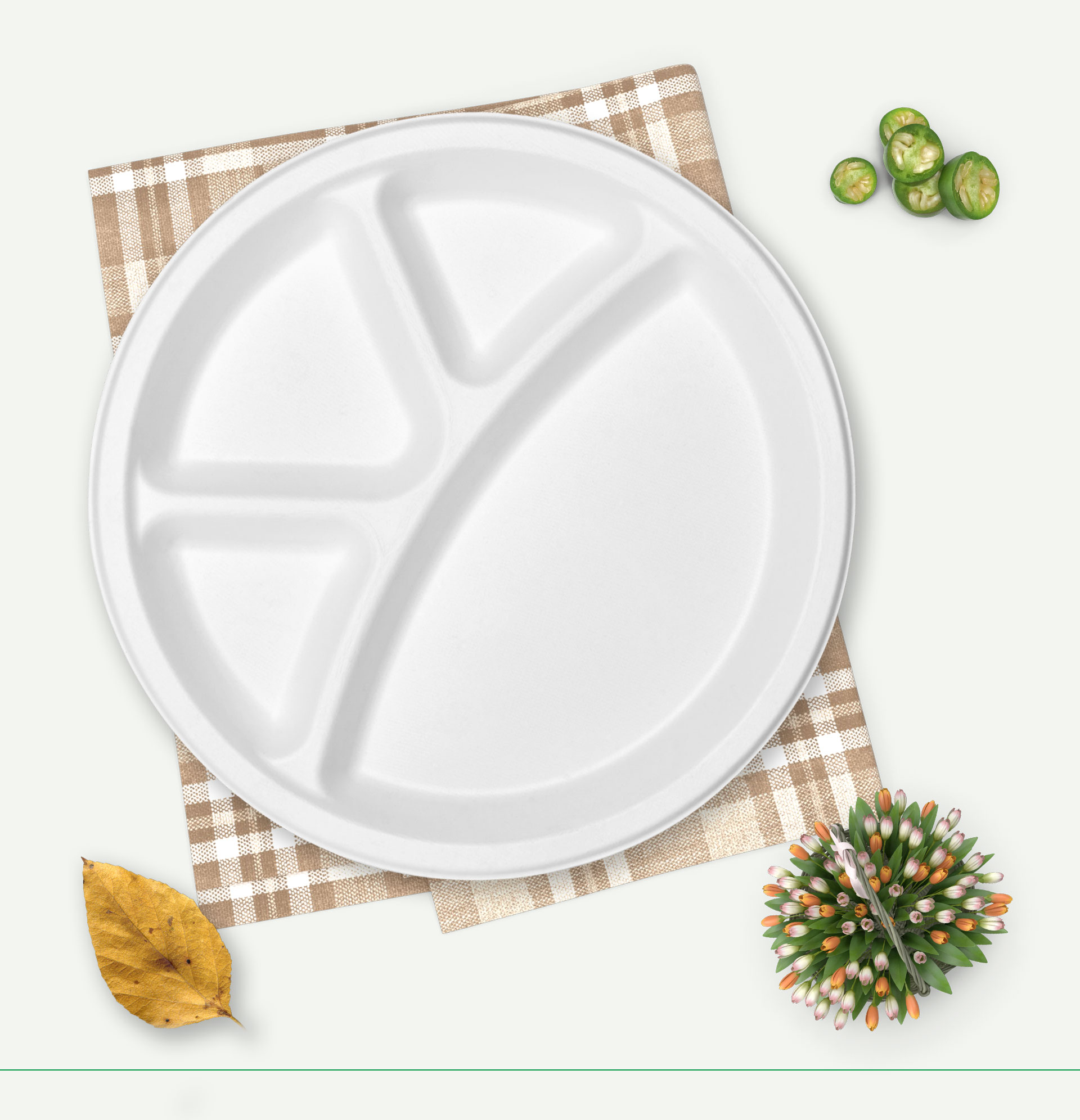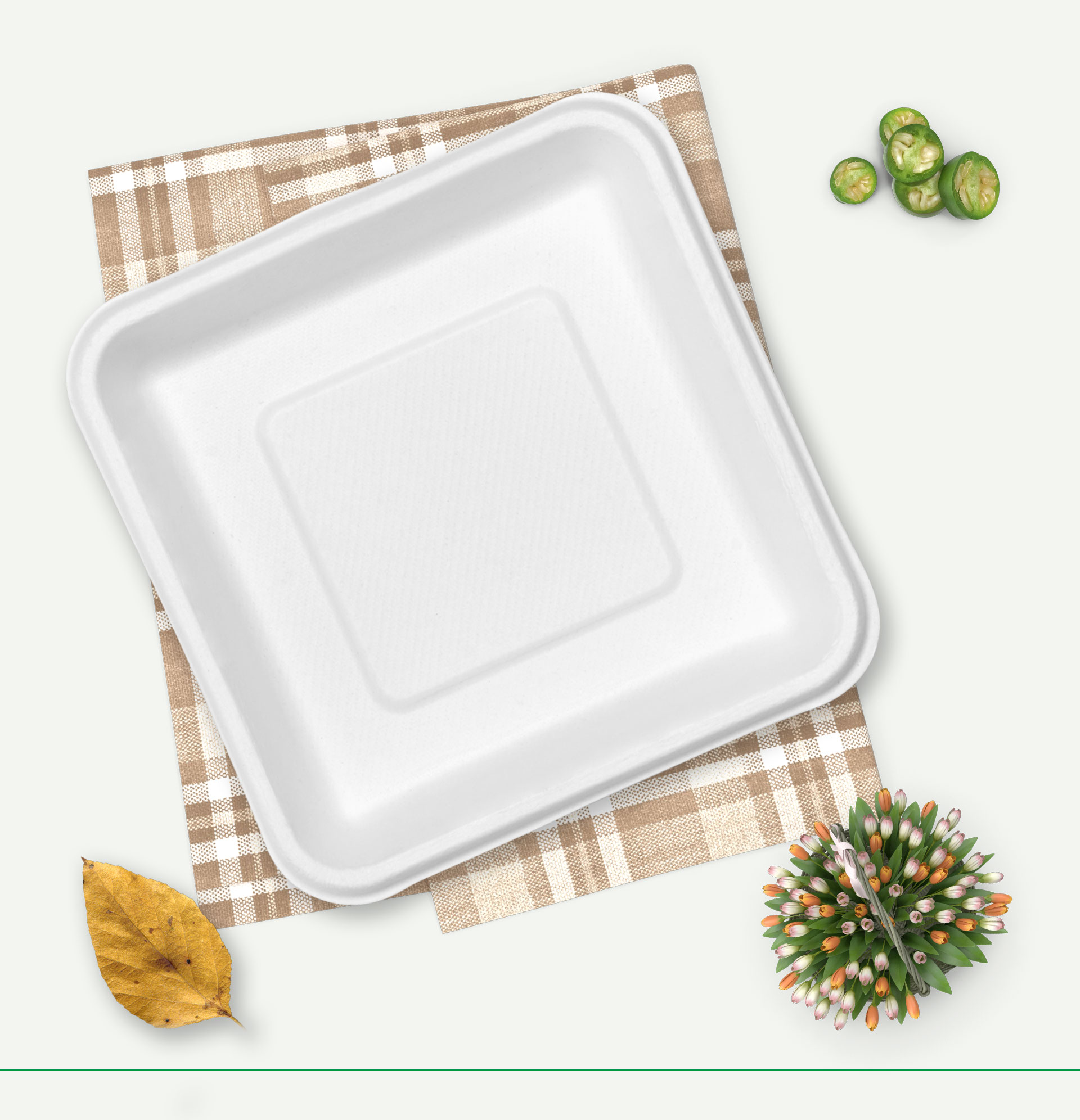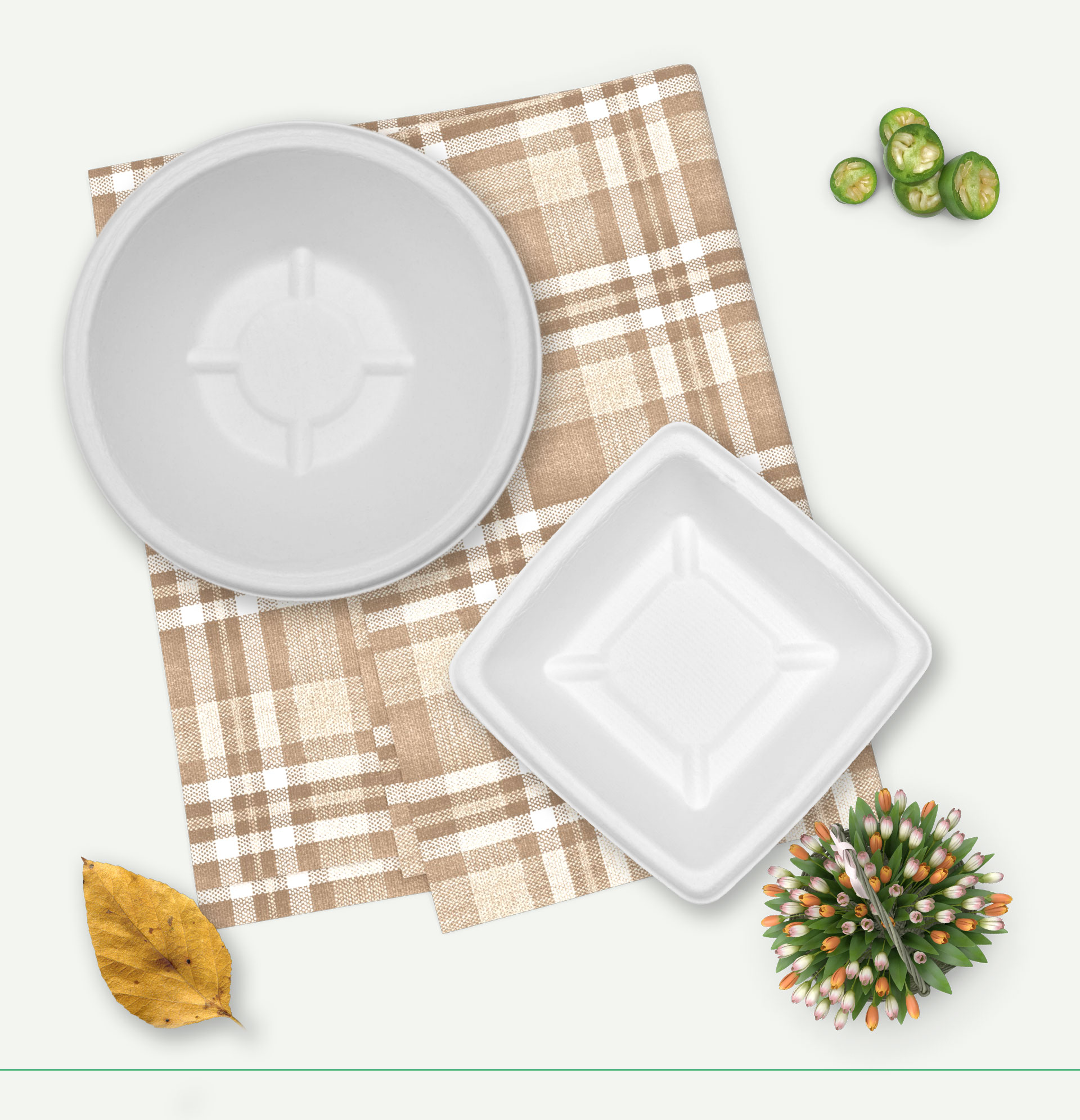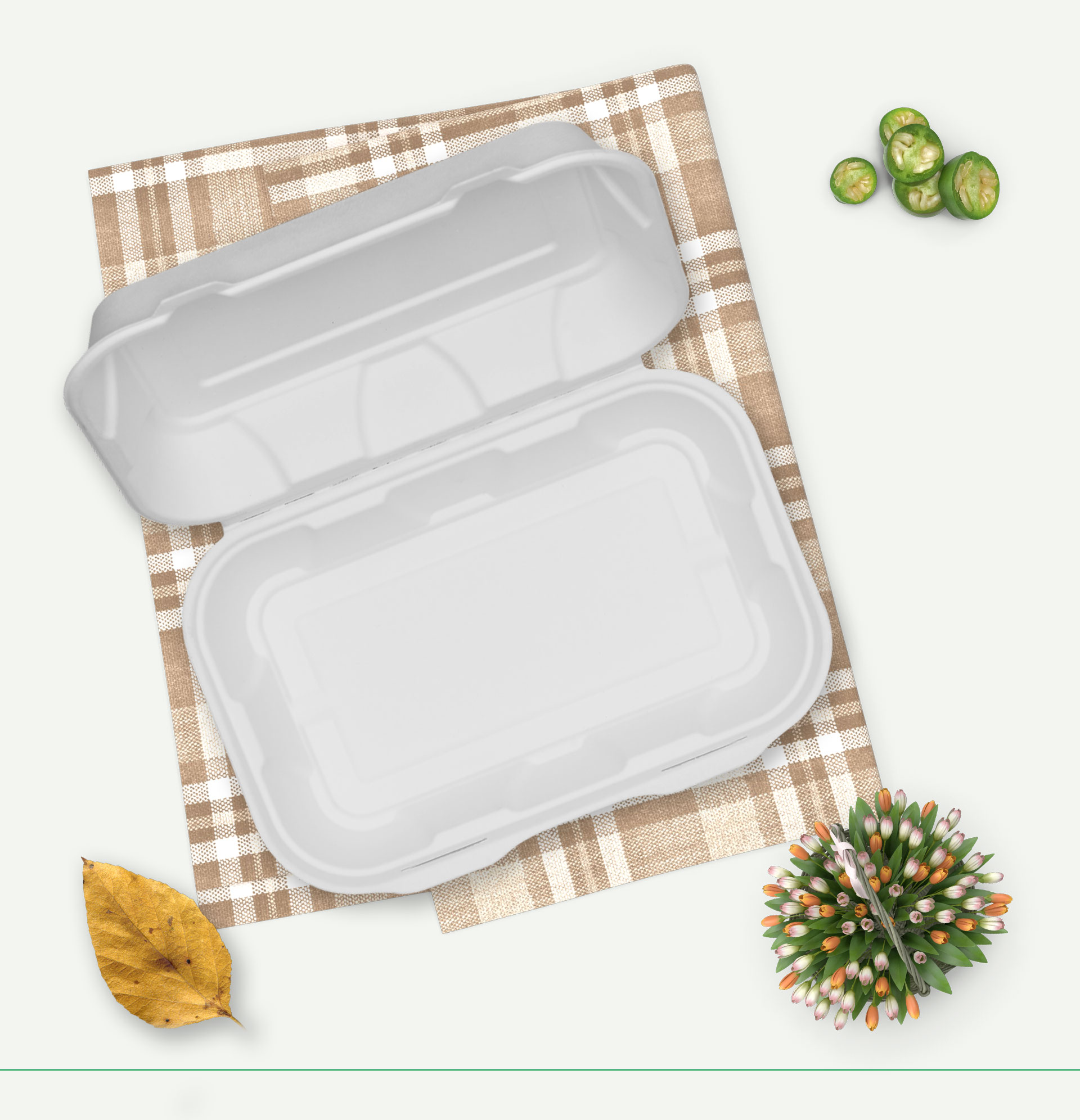
When replacing single-use plastics, Sugarcane Bagasse emerges as the most balanced commercial solution: it costs 40% to 50% less than Areca Palm Leaf, nests tightly to cut warehouse storage and freight costs by more than half, and dramatically outperforms Paper Plates in structural rigidity, oil resistance, and microwave safety without requiring chemical plastic coatings.
With plastic bans enforced across municipal corporations in India and state-level packaging mandates across North America and Europe, foodservice procurement directors, restaurant owners, and caterers are actively transitioning to sustainable disposables. But with multiple eco-friendly materials on the market, choosing the right product involves balancing guest satisfaction, food safety, and bottom-line unit economics.
The three most common plant-based tableware choices are Moulded Sugarcane Bagasse, Areca Palm Leaf, and Paper/Cardboard. While all three are marketed as "eco-friendly," they differ dramatically in mechanical performance, heat endurance, moisture absorption, and landed wholesale cost. As an integrated manufacturer operating in Morbi, Gujarat, Eximius Greenfield provides this honest, data-driven comparison to help institutional buyers make informed procurement decisions.
The table below summarizes the key operational metrics commercial buyers evaluate when placing bulk wholesale orders:
| Performance Metric | Sugarcane Bagasse | Areca Palm Leaf | Heavy-Duty Paper / Cardboard |
|---|---|---|---|
| Raw Material Source | Crushed sugarcane stalk pulp (agricultural by-product) | Naturally fallen Areca catechu palm sheaths | Wood pulp from trees (virgin or recycled fiber) |
| Wholesale Unit Price | Low to Moderate (Optimal B2B Index) | High (approx. 1.8x – 2.5x the cost of bagasse) | Low (for thin sheets) to Moderate (for double-ply) |
| Oil & Grease Resistance | Superior (Natural high-density pulp barrier up to 120°C) | Good (Natural waxy leaf cuticle, but varies per leaf) | Poor unless laminated with plastic/PLA film |
| Hot Liquid / Gravy Handling | Zero leakage; holds hot curries, soups, and gravies | Good, but may develop small pinholes or weep along leaf grain | Sogginess and buckling within 10 to 15 minutes |
| Microwave & Oven Safety | Microwave safe (up to 120°C) & Freezer safe (-20°C) | Microwave safe for short durations (up to 2 mins) | Microwave safe only if non-metallic/unlined |
| Stacking / Nesting Density | Ultra-compact (Engineered taper, saves 60% warehouse space) | Bulky and irregular (Takes 2.5x to 3x more container volume) | Very compact (Thin flat sheets) |
| Manufacturing Uniformity | 100% consistent precision robotic thermoforming | Natural variations in grain, color, and thickness | Consistent industrial die-cut |
| Composting Timeline | 60 to 90 days in commercial composting facilities | 90 to 180 days (thick lignocellulose structure) | 30 to 60 days (if 100% unlined); decades if plastic-coated |
Bagasse is the fibrous residue remaining after sugarcane stalks are crushed to extract juice. Instead of being incinerated or dumped, this agricultural residue is refined into cellulose pulp and pressed in high-tonnage thermal moulds. Key advantages include:
Areca palm leaf plates are crafted by heat-pressing naturally shed leaves from the betel nut palm, primarily grown in South India. They offer distinct characteristics:
Paper plates remain common for children's birthday parties and dry snacks (sandwiches, cake, chips), but they face fundamental engineering limitations in commercial food service:
Choose Paper Plates for low-budget events serving dry, lightweight snacks where hot foods and gravies are not present.
Choose Areca Palm Leaf for premium boutique events, luxury rustic weddings, or eco-resorts where the higher unit cost (2x bagasse) is acceptable for natural wooden aesthetics.
Choose Sugarcane Bagasse for commercial restaurants, cloud kitchens, wedding catering buffets, corporate canteens, and supermarket private-label lines where maximum load strength, zero leakage, compact warehouse nesting, and competitive unit economics are required.
No. Sugarcane bagasse is made 100% from agricultural sugarcane crop residue after juice extraction. Zero trees are felled in the manufacturing process, making bagasse a true zero-deforestation solution.
Yes. Our precision thermoforming process compresses dense cellulose fibers into an impermeable barrier that resists oil, ghee, and grease at temperatures up to 120°C (248°F) without plastic or fluorinated PFAS coatings.
Because bagasse plates are pressed in high-precision automated steel dies with a consistent draft angle, they stack with millimeter precision. In contrast, palm leaf plates retain natural leaf curves and require up to 2.5 times more carton volume for the same quantity of plates, drastically increasing domestic freight and sea container shipping costs.