
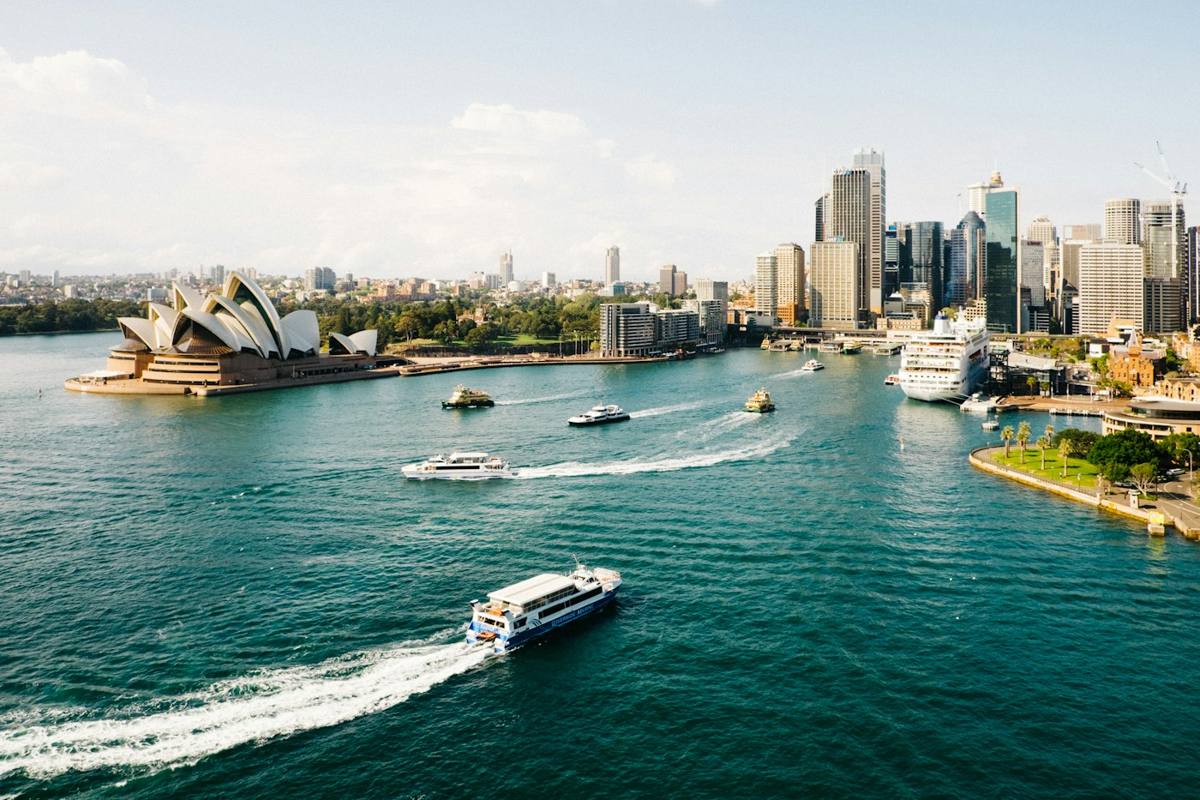
Bagasse Tableware from India for Australian Importers & Distributors
Plant-fibre plates, bowls and clamshells for cafes, caterers, events and retailers across Australia. Made in Gujarat, sold factory-direct and shipped by the container to Sydney, Melbourne, Brisbane, Fremantle and Adelaide.
- Plant-fibre alternative as state plastic bans widen
- Metric specifications for every product
- Factory-direct: 3,500 tonnes a year capacity
- Private label for Australian brands and distributors
Get your Australian export quote
Tell us what you need. Our export team will reply by email.
Can Australian businesses import bagasse tableware from India?
Yes, with a biosecurity check first. Eximius Greenfield, a manufacturer in Morbi, Gujarat, exports sugarcane bagasse plates, bowls and clamshells to Australia by sea container. Because bagasse is a plant product, check the Department of Agriculture's BICON database for import conditions before you ship.
Single-use plastic plates, bowls and cutlery are banned or being phased out in most states and territories, so cafes and caterers are moving to fibre. Goods are classified under HS 4823.70, and the Australia-India ECTA (in force since December 2022) can reduce duty for goods originating in India with proof of origin.
Last reviewed 24 November 2026. Rules and duty rates change, so confirm the details for your shipment with your customs broker.
- Supplier
- Eximius Greenfield Pvt Ltd, Morbi, Gujarat, India
- Material
- Moulded sugarcane bagasse pulp
- Range
- Plates 6-12 in, compartment trays, bowls 120-350 ml, clamshells
- Capacity
- 3,500 tonnes a year, robotic forming
- Quality
- ISO 9001 certified; BRC Packaging compliant
- Commodity code
- HS 4823.70 (Australian tariff code via your broker)
- Ports
- Loaded at Mundra or Kandla; to Sydney, Melbourne, Brisbane, Fremantle, Adelaide
- Services
- Private label, contract manufacturing
Plastic plates and bowls are banned state by state
There is no single national rule. Each state and territory has introduced its own ban on single-use plastic foodware, so cafes, caterers and venues are replacing plastic plates, bowls and cutlery with fibre and reusable options on different timetables. Several states also cover plastic-lined paper plates and bowls, so what a plate is lined with matters as much as what it is made from.
| State | What the state government says | Worth knowing |
|---|---|---|
| NSW | Plastic cutlery, plates and bowls banned, phased in; extra rules on attached items and EPS foodware from 1 January 2025 | Check the EPA's foodservice guidance |
| Victoria | Single-use plastic straws, cutlery, plates and drink stirrers banned from 1 February 2023 | Sources differ on dates for later additions |
| Queensland | Straws, stirrers, plates, unenclosed bowls and cutlery | Foam foodware is also covered |
| Western Australia | Disposable plastic foodware without lids (plates, bowls, containers), plastic cutlery and EPS food containers | Rolled out in stages |
| South Australia | Plastic cutlery banned in 2021; plates and bowls from 1 September 2023; final stage 1 September 2025 | Plastic-lined paper items covered |
| ACT | Plastic cutlery, stirrers, plates and bowls banned | Bowls with a spill-proof lid are exempt |
Summary of state government pages checked on 24 November 2026. Scope, exemptions and dates differ by state and territory, and others have their own rules, so confirm your own state's current guidance. This is not legal advice.
Check BICON before you book a container
Bagasse is a plant product, and Australia protects its agriculture with strict import controls. The Department of Agriculture's BICON database lists whether a commodity is permitted, whether it needs a permit, supporting documents or treatment, and packaging materials have their own entry. This is the step most first-time importers of fibre tableware skip, so do it before you pay a deposit.
- Search BICON for your productLook up bagasse, moulded pulp or the relevant plant-product case and note any conditions, permits or treatments.
- Ask the department if the result is unclearThe Department of Agriculture import team (imports@aff.gov.au, 1800 900 090) can confirm requirements for your specific goods and packing.
- Tell us what your broker needsShare any production-process information or declarations your broker or the department asks for, and we will confirm what we can supply.
- Plan clean packingAsk about pallets, cartons and container condition, as packaging and the container itself are also inspected on arrival.
We could not find a BICON listing specific to bagasse tableware, so confirm the current requirement directly with the department rather than relying on this page.
The Australia-India trade agreement and your paperwork
ECTA duty access
The Australia-India Economic Cooperation and Trade Agreement has been in force since December 2022. DFAT explains that preference applies to goods originating in India and that claims need supporting documents such as a Certificate of Origin. Duty is staged by tariff line, so look up HS 4823.70 in the Australian Border Force working tariff and check its staging category, or ask your customs broker.
Compostable claims
If you market products as compostable, the ACCC expects environmental claims to be backed by evidence, and buyers often ask about certification to AS 4736 (industrial composting) or AS 5810 (home composting). Tell us which certification you need and we will confirm what test evidence is available before you order.
Where bagasse tableware fits in Australia
From Sydney brunch spots to Friday-night sausage sizzles, here is how the range maps to Australian food service.
Cafes, brunch and takeaway coffee shops
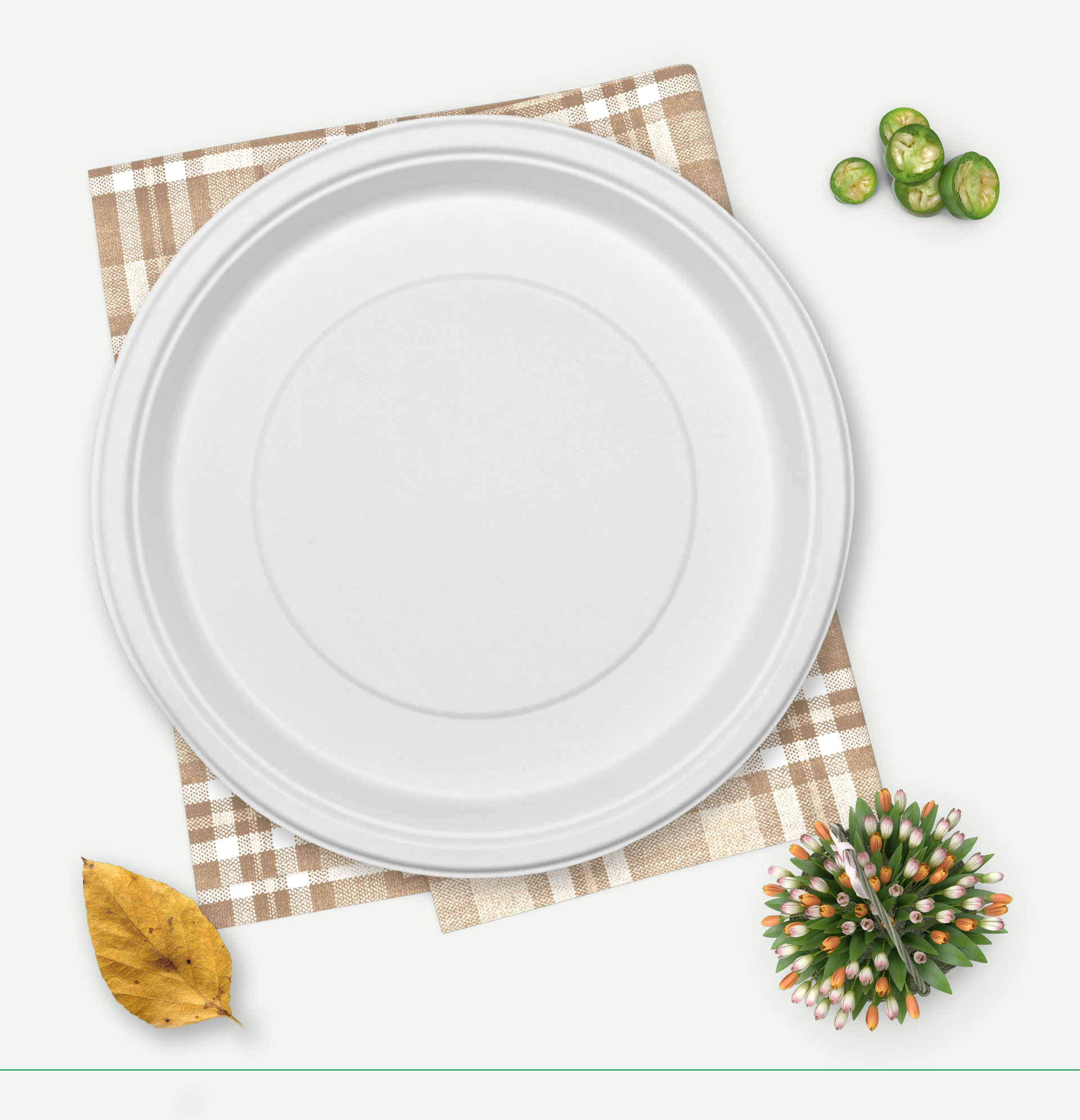
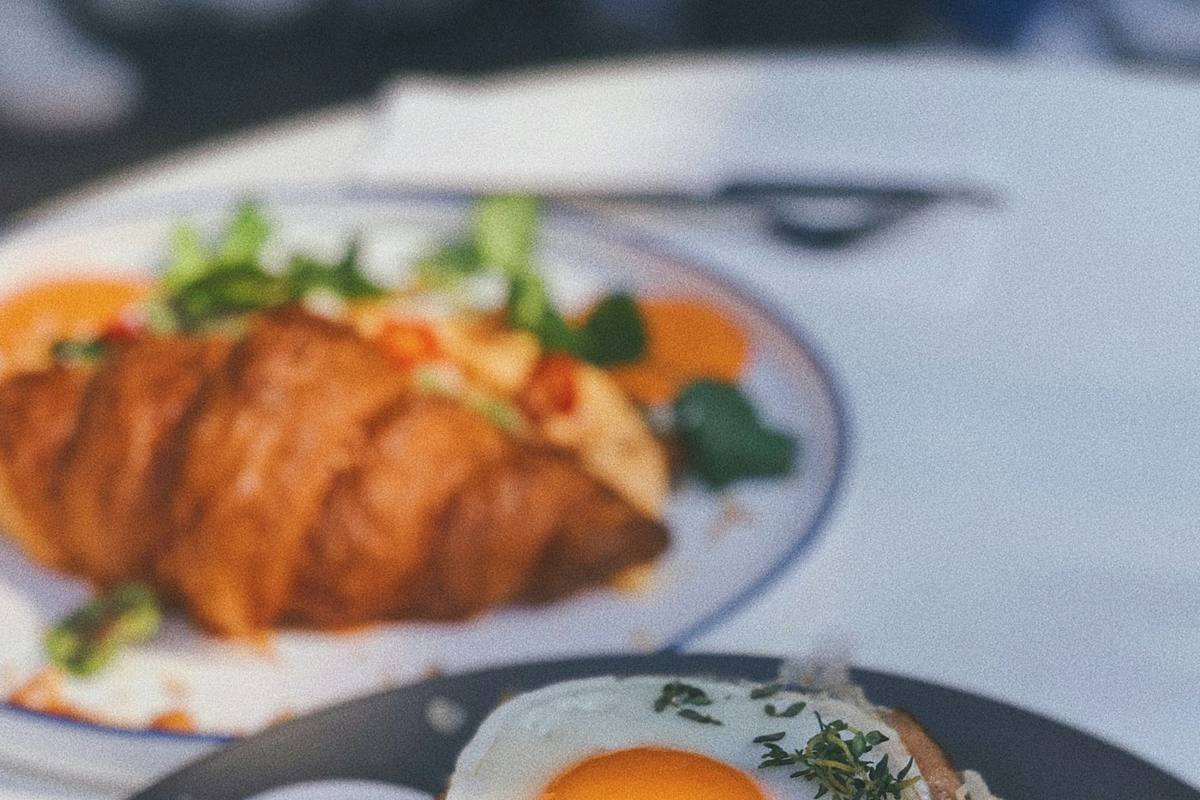
Brunch menus are heavy and saucy, so plates need strength. Our 9 inch (225 mm) and 10 inch (256 mm) round plates and the 350 ml bowl suit eggs, pancakes and granola, while the 6 and 7 inch plates serve pastries and sides.
- Oil-proofed, so bacon and sauces do not soak through
- Microwave safe for reheating behind the counter
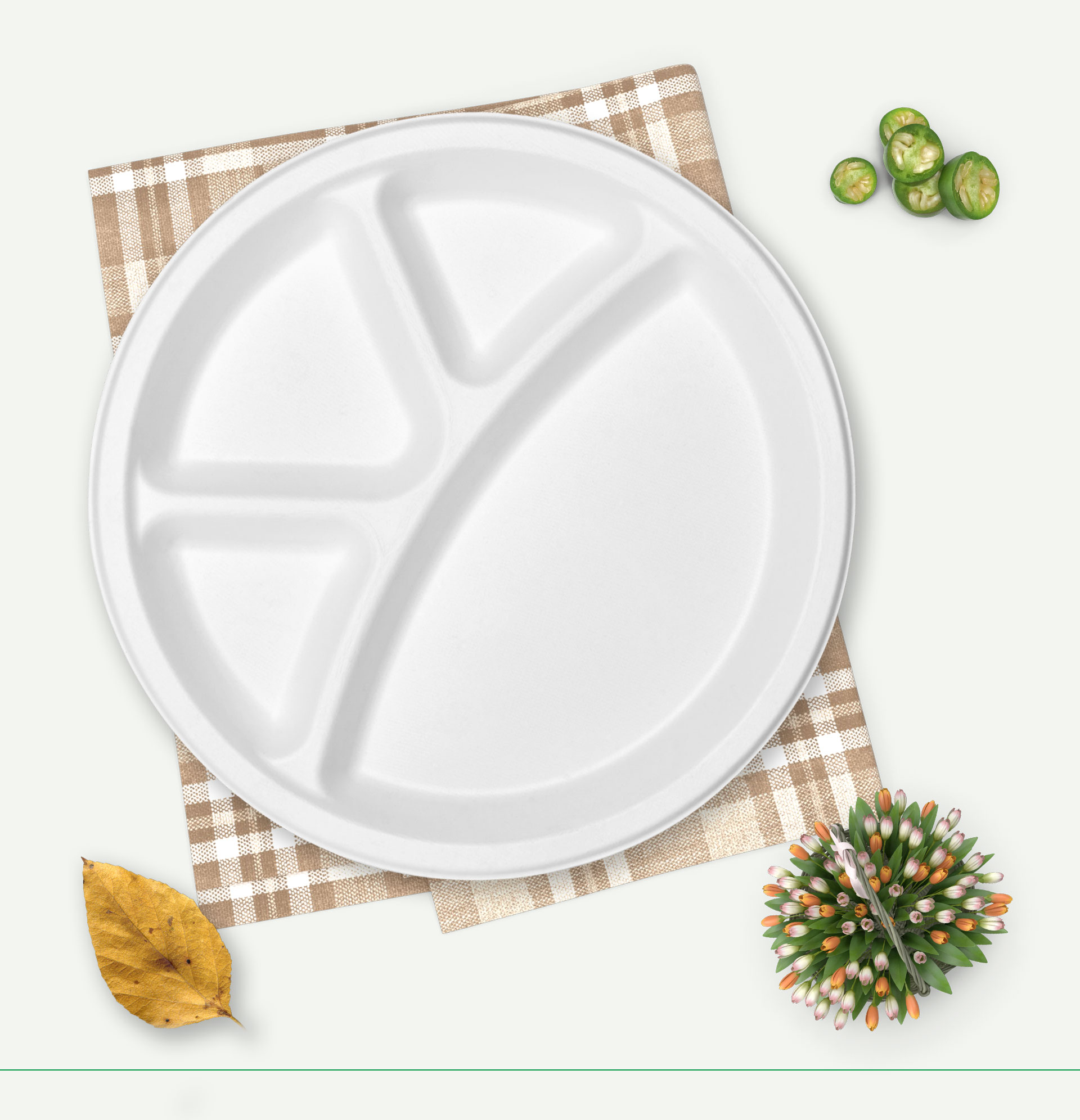
- Compartment trays for share plates and meal deals
Clamshells
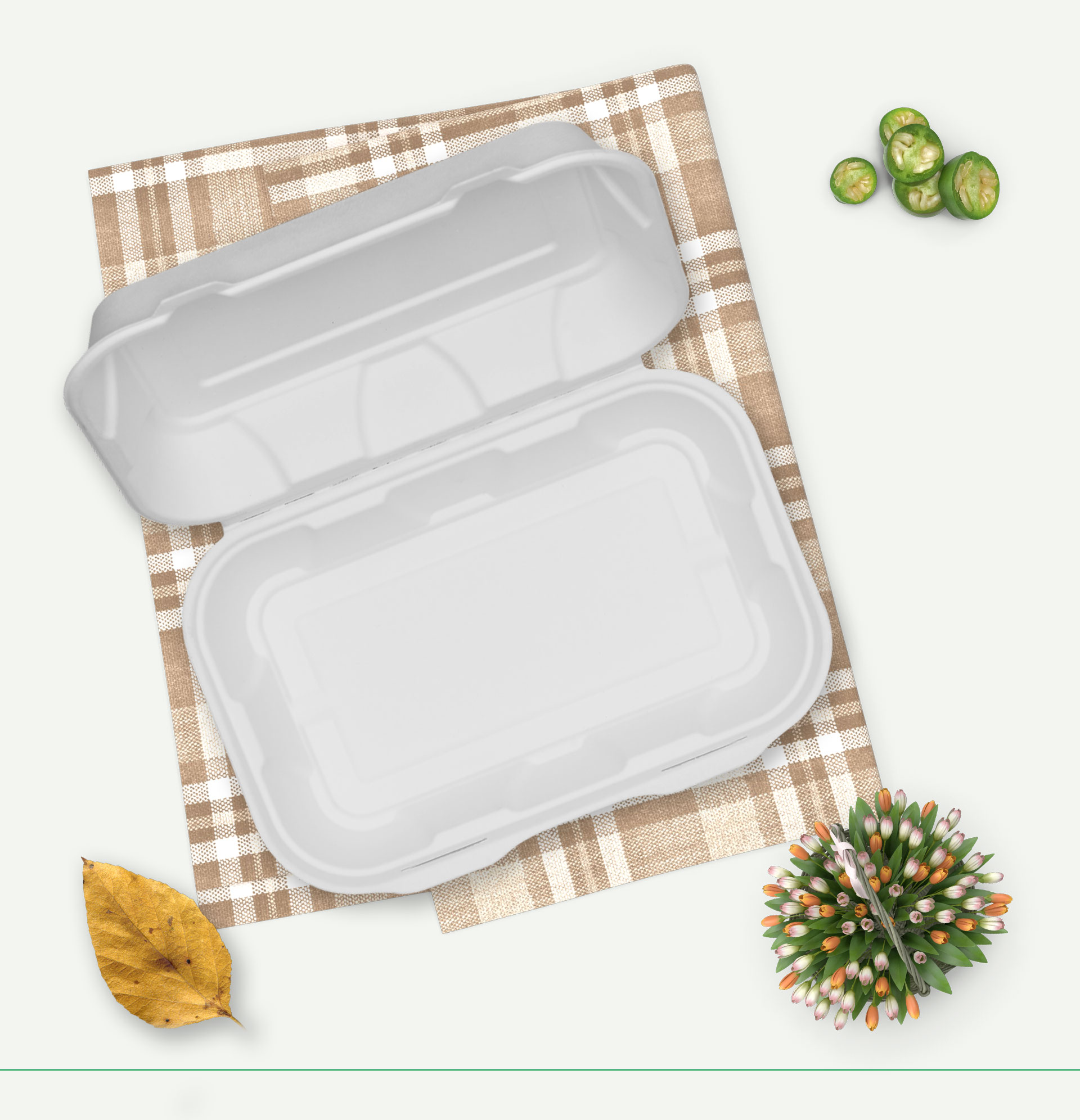
6 x 6, 9 x 6 and 9 x 9 inch hinged clamshells, including a 3-compartment version, travel well. See the clamshell range.
Compartment trays
The 290 x 235 mm 4-compartment tray separates mains and sides for portion control. See compartment plates.
Plates and trays
Square trays and 9 inch plates suit weekend markets, festivals and corporate catering. See square trays and round plates.
BBQs, sports clubs and fundraisers
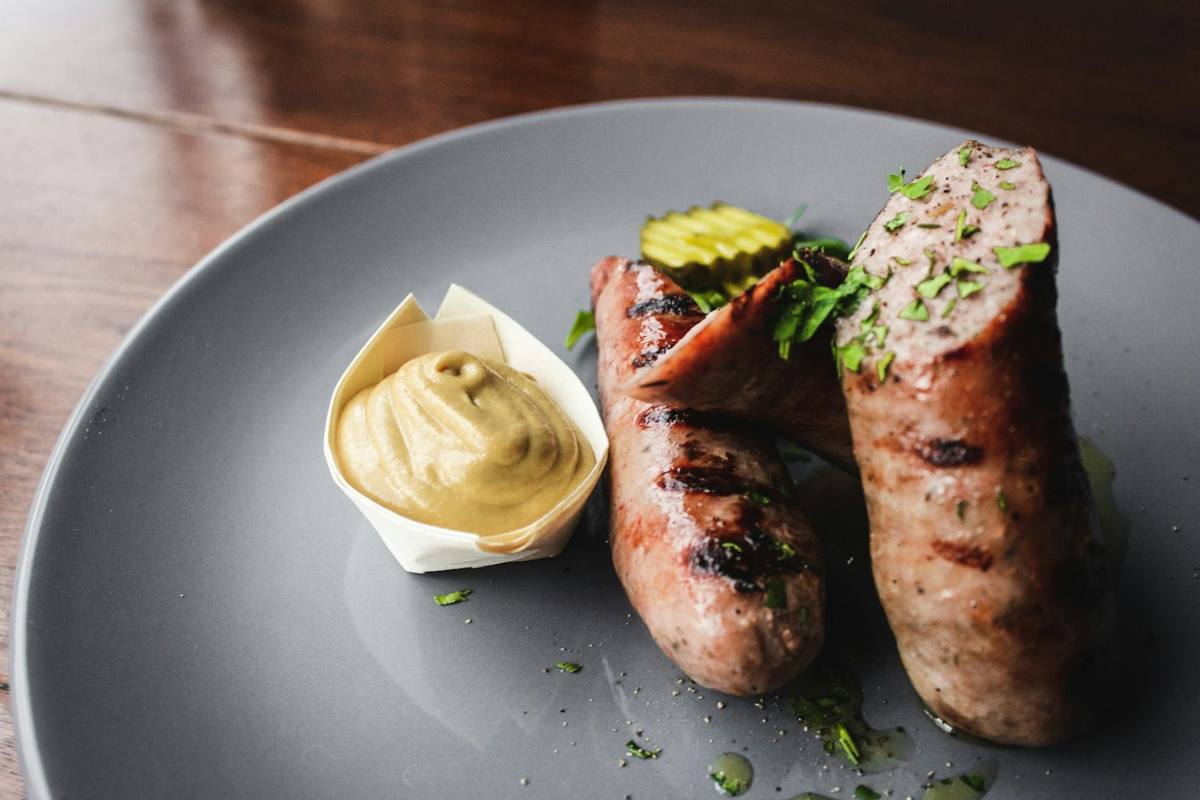
Community sausage sizzles run through thousands of plates in a weekend. A 7 inch (180 mm) plate weighs just 9 g and packs 1,000 to a carton, so storage and freight stay simple.
From Gujarat to an Australian port
We pack in standard export cartons and load 20ft and 40ft high-cube containers at Mundra or Kandla. From there the container sails to the Australian port of your choice, commonly Sydney, Melbourne, Brisbane, Fremantle or Adelaide. Ask for the current sailing schedule with your quote, as transit varies by carrier service.
Worked example: one 40ft high-cube of 350 ml bowls
Our 350 ml (12 oz) bowl packs 1,000 per carton and 1,601 cartons fit in a 40ft high-cube container.
That is 1,601,000 bowls. At 9 g each, the bowls alone weigh roughly 14.4 tonnes. Mixed loads are possible, so tell us the split you need and we will confirm the loading plan.
Sizes, weights and container loads in metric
Dimensions are in millimetres with inches alongside. Piece counts per 20ft and 40ft high-cube (HC) container come from our standard export cartons.
| Product | Size (mm) | Size (inches) | Weight (g) | Pcs / carton | Pcs in 20ft | Pcs in 40ft HC |
|---|---|---|---|---|---|---|
| Round plate 6 in | Ø151 x 18 | Ø6" x 0.7" | 7 | 1,500 | 613,500 | 1,602,000 |
| Round plate 7 in | Ø180 x 19.5 | Ø7" x 0.75" | 9 | 1,000 | 477,000 | 1,246,000 |
| Round plate 9 in | Ø225 x 20 | Ø9" x 0.8" | 14 | 500 | 426,000 | 1,114,000 |
| Round plate 10 in | Ø256 x 22 | Ø10" x 0.9" | 20 | 500 | 256,000 | 669,500 |
| Round plate 11 in | Ø280 x 23 | Ø11" x 0.9" | 24 | 500 | 219,000 | 572,000 |
| Round plate 12 in | Ø302 x 24 | Ø12" x 0.9" | 27 | 500 | 162,500 | 424,000 |
| Square tray 1D | 137 x 137 x 21 | 5.4" x 5.4" x 0.8" | 8.5 | 1,000 | 691,000 | 1,805,000 |
| Dona tray | 104 x 104 x 26 | 4" x 4" x 1" | 5 | 1,500 | 1,120,500 | 2,929,500 |
| Bowl 350 ml (12 oz) | Ø151 x 41 | Ø6" x 1.6" | 9 | 1,000 | 613,000 | 1,601,000 |
| Bowl 240 ml (8 oz) | Ø134 x 39 | Ø5.25" x 1.5" | 7 | 1,000 | 808,000 | 2,113,000 |
| Bowl 210 ml (7 oz) | Ø115 x 38 | Ø4.5" x 1.5" | 5.5 | 1,000 | 980,000 | 2,562,000 |
| Bowl 180 ml (6 oz) | Ø107 x 40 | Ø4.2" x 1.5" | 4.7 | 1,200 | 1,063,200 | 2,780,400 |
| Bowl 120 ml (4 oz) | Ø88 x 33 | Ø3.5" x 1.3" | 3.75 | 2,400 | 1,368,000 | 3,578,400 |
| Clamshell 6 x 6 in | 153 x 153 x 42 | 6" x 6" x 1.7" | 20 | 500 | 305,000 | 797,500 |
| Clamshell 9 x 6 in | 153 x 232 x 42 | 6" x 9" x 1.7" | 30 | 250 | 206,000 | 538,750 |
| Clamshell 9 x 9 in | 230 x 230 x 47 | 9" x 9" x 1.9" | 45 | 200 | 128,000 | 334,800 |
| Clamshell 9 x 9 in, 3 compartment | 230 x 230 x 47 | 9" x 9" x 1.9" | 45 | 200 | 106,200 | 277,400 |
Standard export cartons; actual loading varies with palletising and mixed loads. We also make compartment plates and meal trays (2, 3, 4 and 5 compartments): see the compartment plate range or ask for a loading plan.
Questions Australian buyers ask about importing bagasse tableware
Are plastic plates and bowls banned in Australia?
Australia regulates this state by state. NSW, Victoria, Queensland, South Australia, Western Australia and the ACT have banned or are phasing out single-use plastic plates, bowls and cutlery, with scope and dates that differ. Several states also cover plastic-lined paper plates and bowls. Check your own state's guidance, because exemptions vary.
Can I import bagasse tableware into Australia?
Bagasse is a plant product, so Australia's biosecurity system assesses it. The Department of Agriculture's BICON database tells you whether a commodity is permitted, needs a permit, documents or treatment. Search BICON for your product, and contact the department's import team if the result is unclear, before you book a container.
What is the HS code and import duty for bagasse tableware in Australia?
Moulded sugarcane bagasse plates, bowls and clamshells are generally classified under HS heading 4823.70. The Australia-India ECTA, in force since December 2022, gives preferential access for goods originating in India with supporting proof such as a Certificate of Origin. Look up your exact code in the Australian Border Force working tariff, or ask your broker.
Which Australian ports can you ship to?
We load containers in Gujarat, at Mundra or Kandla, and can quote delivery to Australian container ports such as Sydney, Melbourne, Brisbane, Fremantle and Adelaide. Ask for FOB or CIF pricing and the current sailing schedule when you request a quote.
How many bowls fit in a 40ft container?
It depends on the product. A 40ft high-cube container holds about 1,601,000 of our 350 ml (12 oz) bowls, 1,114,000 of our 9 inch (225 mm) plates or 538,750 of our 9 x 6 inch clamshells, based on our standard export cartons. The full table is on this page.
Is bagasse tableware certified compostable in Australia?
Bagasse is a plant fibre and is widely used as a compostable alternative. Formal certification to Australian standards for industrial composting (AS 4736) or home composting (AS 5810) is a separate question, and the ACCC expects environmental claims to be evidenced. Tell us which certification you need and we will confirm what test evidence is available.
Can I sell bagasse tableware under my own Australian brand?
Yes. We offer private labeling and contract manufacturing, so Australian distributors, cafe groups and retail brands can sell compostable tableware under their own name. Mention private label and your target quantities in your enquiry and we will explain the options.
Is your bagasse tableware microwave and freezer safe?
Yes. Our plates, bowls and clamshells are microwave safe and refrigerator and freezer safe, suitable for hot and cold food, and oil-proofed to handle oily and wet dishes.
What is the minimum order quantity?
We offer flexible order quantities. Most importers plan by full container load, and minimums depend on the products and whether you want private label packing. Send your target volumes and the port you ship to and we will quote accordingly.
Where this information comes from
Regulatory points on this page come from the public sources below and were checked on 24 November 2026. Product data comes from our own specification sheets. This page is general guidance, not legal advice.
- DFAT: Australia-India ECTA, Chapter 2 Trade in Goods
- DFAT: Using the ECTA to do business with India
- Department of Agriculture: BICON, Biosecurity Import Conditions
- NSW EPA: Plastics Plan 2.0
- Queensland Government: Single-use plastic products ban
- Western Australia: Plan for Plastics
- South Australia: Replace the Waste
- ACT Government: Single-use plastics
- NSW Parliament: Single-use plastic product bans in Australia
Ready to source bagasse tableware for Australia?
Send your product list, quantities and destination port. We will come back with pricing, container loading and sample options.